Tuesday, March 26, 2013

A Riot Of Colors

Holi Hai Bhai Holi Hai! Wishing all my readers a very colorful Holi!

I know the other side of the country is eagerly awaiting the arrival of spring; but I hope the colors of Holi wash away all the white and brighten up you days. Over here, spring is peeking through the pink-purple-yellow wildflowers dotting the green patches everywhere, the sweet songs of red-black-blue birds hopping in our yards, and the tender green shoots covering the bare bones of all the trees. There's a riot of colors everywhere; happy times are here again!


What colorful food will you eat for Holi? No, I'm not talking about artificial food colors. I'm referring to the bounty of veggies and fruits that add a splash of color to our plates. We've all heard our grandmas saying, "Eat your colors! They make a balanced diet." Scientific research now shows that the color pigment in different fruits and veggies results from the compounds, vitamins and other nutrients in them. Old cultures have always emphasized the importance of eating foods from various color families. Mom always taught me to pick different colored veggies/fruits/beans when planning a menu. Holi is a perfect time to remind ourselves that colorful foods are not just pleasing to the eyes, but nourishing to our bodies. Eat a rainbow every day to ensure you get the essential nutrients your body needs**. A few good articles on the benefits of colorful foods - NYTimes HealthDr. OzSFO Chronicle.

**Please note: I'm no nutritionist or doctor. But I suppose eating a variety of fruits and veggies doesn't hurt anyone :D.

Rainbow of foods

Red/Pink: Provide antioxidants, vitamin A and C.
Examples: Tomatoes, Red bell pepper, Pomegranate, Strawberries, Watermelon

Watermelon Salad
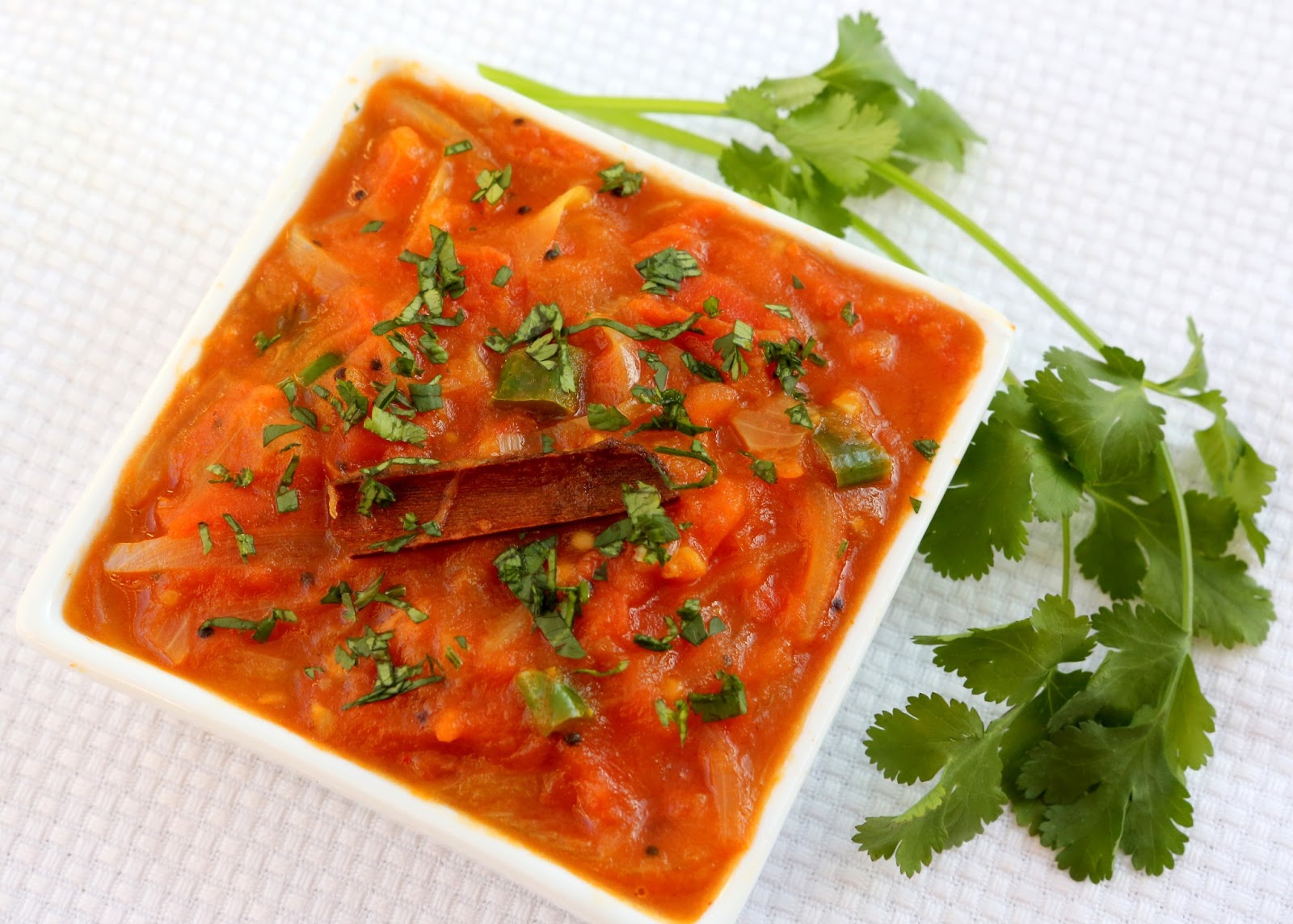
Tomato Bhaji
Orange/Yellow: Rich in vitamin A, vitamin C.
Examples: Apricots, Squash, Carrots, Orange, Papaya, Peaches, Mangoes

Green: Fiber, vitamin K, chlorophyll - a natural purifier, vitamin B
Examples: Spinach, Kale, Lettuce, Zucchini, Green bell peppers, Peas, Green Beans, Broccoli, Leafy veggies

Spinach Thoran
Blue/Purple: Anthocyanins, Vitamin K
Examples: Eggplants, Beets, Purple cabbage, Blueberries, Figs, Plums, Blackberries

Berry Trifle
Fig Barfi
May your lives be filled with healthful colors!

Friday, March 22, 2013

Lunch Club

Once every month or month and a half, a group of my colleagues and I get away from the cubicles at noon, take over one of the conference rooms, and instead of discussing statistical theories, enjoy delicious foods prepared by each other. We have a fun little Lunch Club, which has revealed many great cooks in the group. I can't tell you what feasts these gatherings turn into - we always struggle to get back to work while in food coma! It's nice not to worry about work for some time and talk about our lives outside of the office.

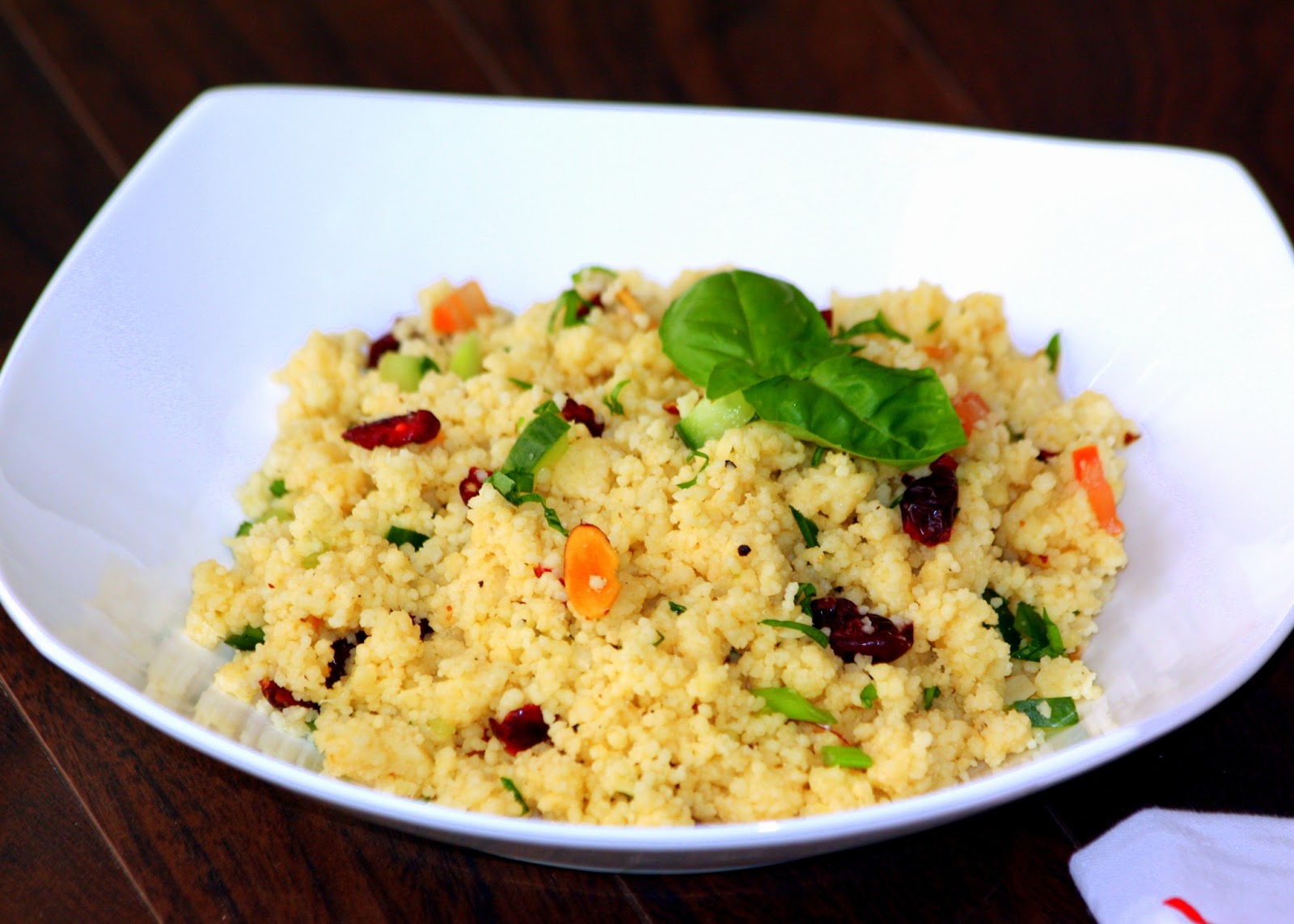
For this month's potluck, I made a simple make-ahead dish. It saved me the hassle of cooking early in the morning and worrying about how it would taste after reheating. A quick, tasty couscous salad which can be made ahead and served chilled.

Couscous, which is semolina flour rolled into little pearls, is softer and fluffier when cooked than semolina itself. I love all sorts of pilafs made with couscous, but my latest fad has been a cold salad with Mediterranean essentials and cranberries! I've eaten variants of this salad at many restaurants. This dish hardly requires any cooking skills; the only somewhat challenging part being the actual cooking of couscous. To make sure it doesn't become too clumpy and dense, I add a dash of oil to it while cooking. Also, it helps to be conservative with the amount of water. You can always add some warm water if the couscous is not cooked completely. And if you can help it, don't turn couscous vigorously - cooking in a non-stick pot on medium heat will help.

**Please note that the measurements in the recipe below are approximate. You can add as many or as little of the veggies/beans as you like.


Couscous Salad With Cranberries

Ingredients:
1 1/2 Cups dry couscous - the smaller variety
Vegetable stock - optional
3 Tablespoons olive oil
2 Small garlic cloves - minced
1 Small Persian cucumber - finely chopped
1 Small tomato - finely chopped
2 Scallions - thinly sliced
1/2 Cup cooked chickpeas
1/4 Cup dried cranberries and toasted almonds
2 Sprigs of basil - julienned
Juice from 1 lime
Salt & freshly cracked pepper to taste

  • Cook couscous according to package instructions. For a more full bodied flavor, use half vegetable stock and half water in cooking. Also, salt it while cooking so it mixes more evenly. 
  • Heat oil in a pot and add minced garlic and saute for a minute until golden brown. Add cooked couscous and turn gently. Then turn off the heat.
  • Add all the veggies, chickpeas, cranberries, almonds and basil. Sprinkle juice from one lime, and season with cracked pepper to taste.
  • Use a fork to mix everything together. This will fluff up the couscous while making sure it doesn't break.
You can dress up the salad with feta cheese. I find it very satisfying the way it is. The salad is not too heavy, but doesn't make you hungry just few minutes after eating it. My favorite part of the dish are cranberries that soak up lemon juice and excess moisture and become plump. Alternatively, you can add raisins or chopped dried apricots for that sweet, chewy bite. 


Monday, March 18, 2013

Spring Blooms

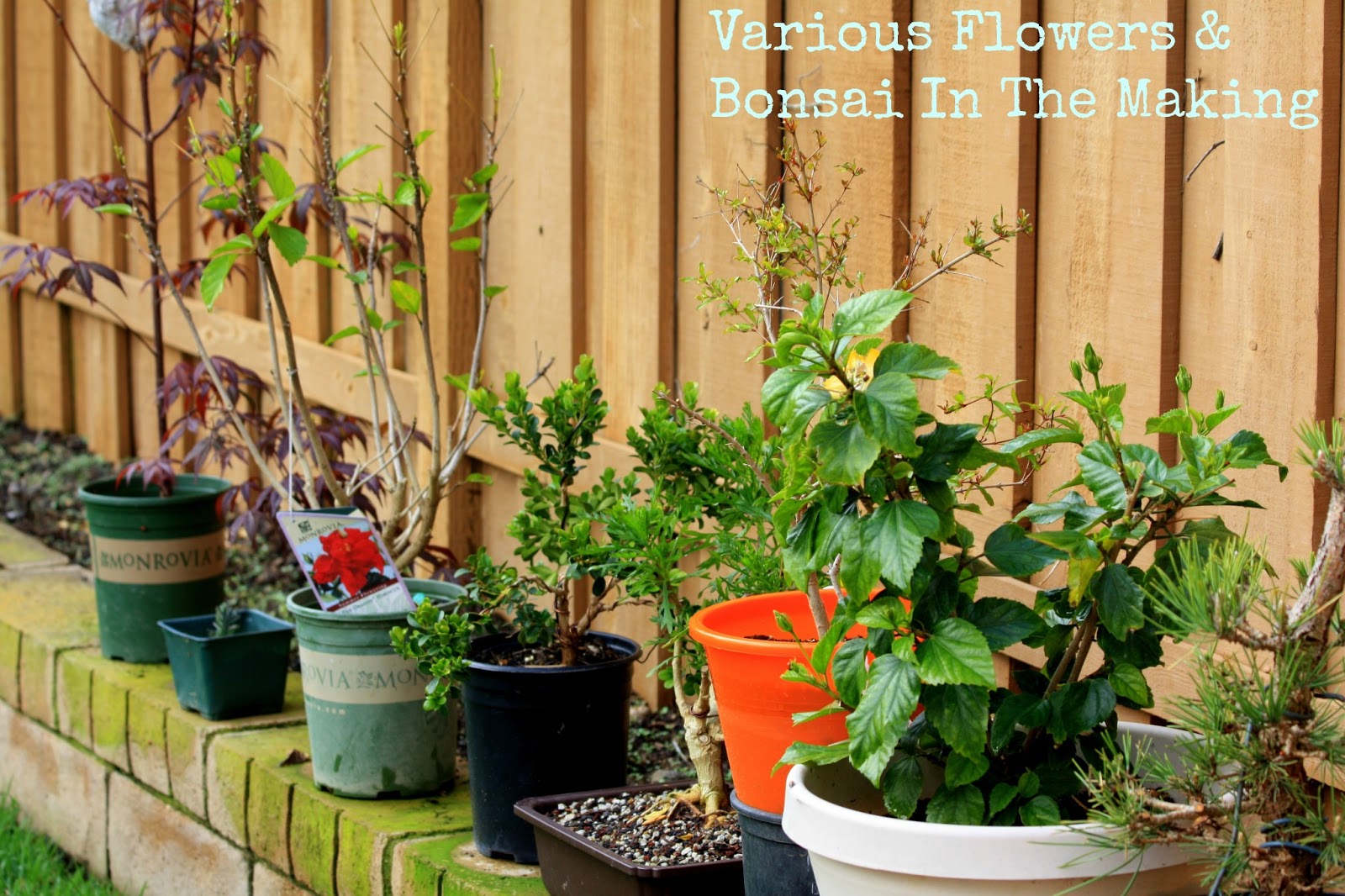
Husband and I got a head start on our garden this year. I admit - he takes more care of the plants than I do. We are  lucky to have plenty of sunlight way before spring, so the seeds we sowed have come to life beautifully indoors with the light coming in through the patio. Here's what we are growing this year!

Tender mustard greens are great in salads. I am waiting for these to grow so that I can make saag!
Girls love ruby!
Husband is a huge fan of Karelas..Hope we get some fruits.
Oh, the heavenly aroma of sage!
Already used some to make roasted potatoes. Mmmm..
We mislabeled this plant. I think it's eggplant, husband thinks it's tomatillo - we'll find out soon hopefully :D
A beautiful flower bucket hubs put together - has lavender which I'm looking forward to using in the kitchen.
Hubby's works of art
Simply gorgeous! This is the first time we are seeing the big trees in the garden bloom.
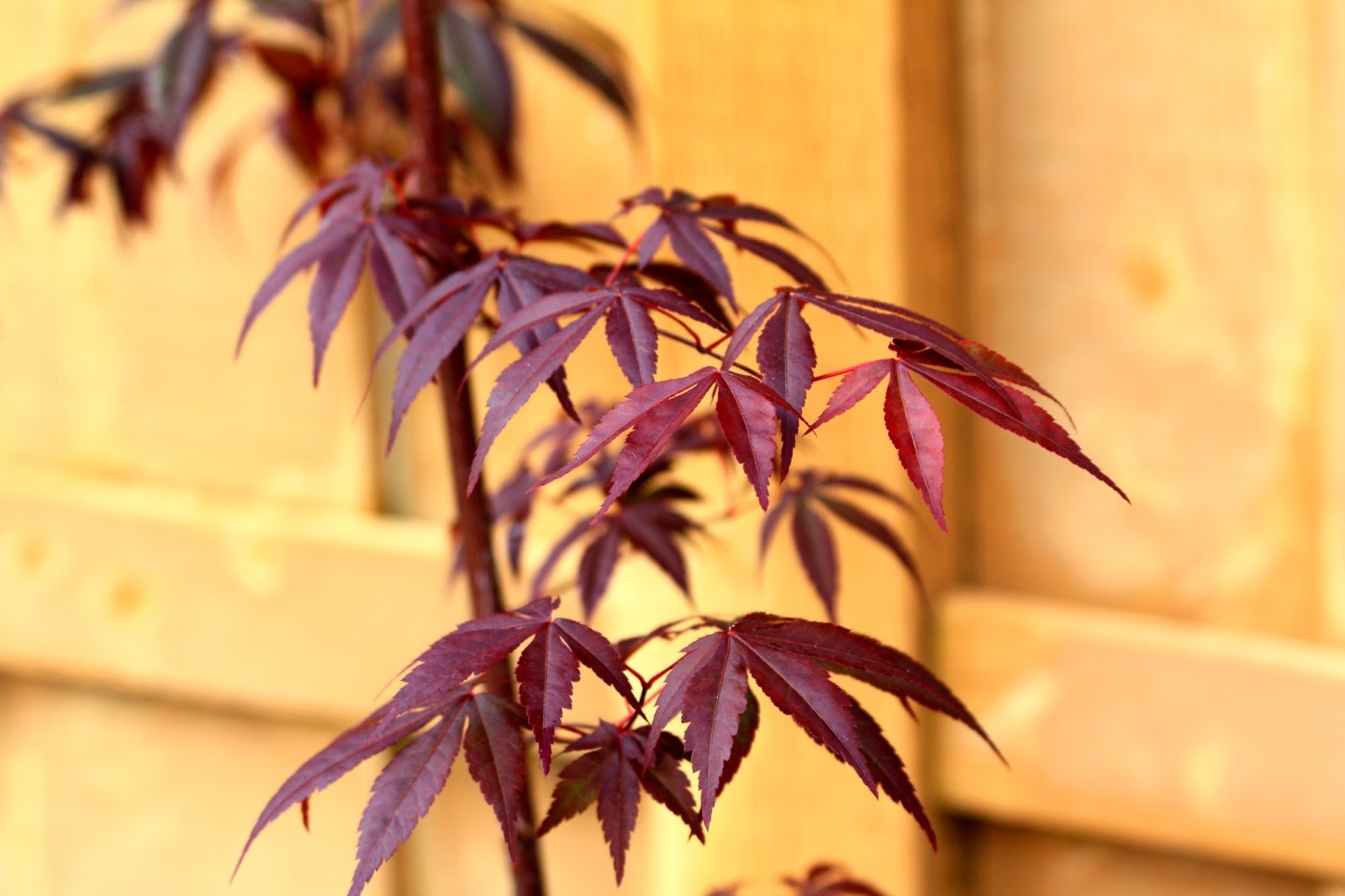
Just bought this Japanese Maple - Look at that beautiful color!
The fig tree was completely bare until last week. Suddenly, the tips of every branch have one leaf and one tiny fig!
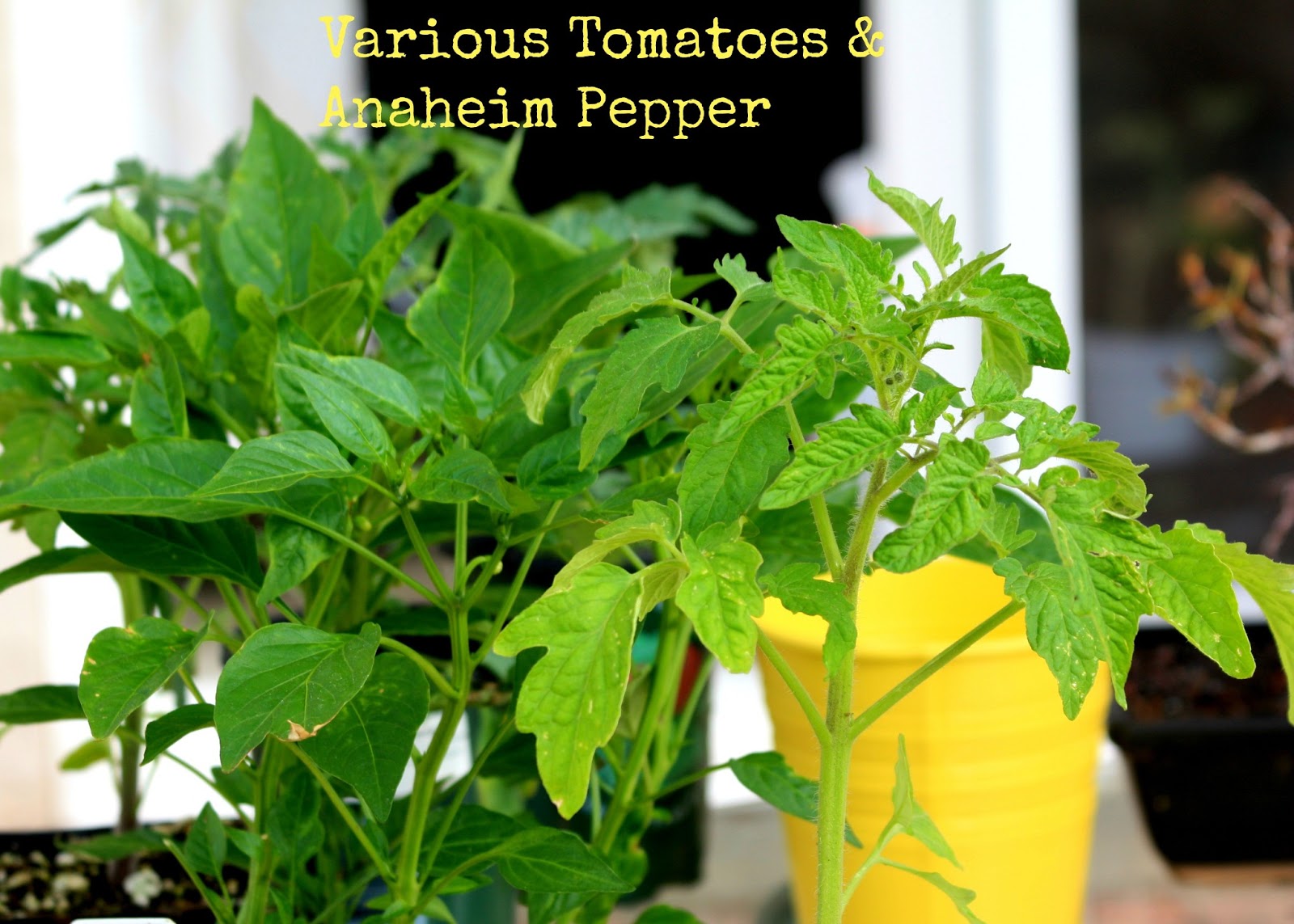
4 types of tomatoes and one pepper plant.
Other than these, we've planted the usual - basil, cilantro and zucchini. There's dill, spinach, holy basil and oregano as well. Let's see how everything turns out. I'm looking forward to a productive summer!

Spring has arrived...Are you planting anything in your garden/patio/balcony/windowsill this year?


Monday, March 11, 2013

Making Everyday Meals Exciting

I was lucky to have grown up having my mom cook us fresh meals every day, twice a day! It was after I started running a kitchen of my own that I realized the challenges of keeping everyday meals exciting. I gotta love my mom for being able to whip up different and exciting meals to keep 6 tummies and tongues pleased all the time. We weren't picky about our food, but let's just say, we were spoiled by great cooks in the house :D. Mom left no room for complaints though. Even on the days we ate simple rice and daal, she would look at whatever was available in the pantry/fridge and come up with a quick side dish to dress up the plate. Like this, this, or  this

Today's recipe is one of my favorites that mom often made. A quick tomato bhaji - a wonderful concoction of sweet and sour, slightly spicy flavors. Although this bhaji looks somewhat like a chutney, it is to be consumed fresh. It doesn't store in the fridge. I love how it adds a little something to a simple dinner with minimal effort and readily available ingredients. The tomatoes of course give it a tangy taste, but two aromatic spices provide an element of surprise - cloves and cinnamon. While the dish is very simple to make, the flavors are complex and satisfy all the taste buds. For some variation, add curry leaves to the tempering, spice it up with a little bit of cumin-coriander powder or garam masala, add ground peanuts for body, or you can even top it off with thin sev for a bit of crunch! All of these versions taste great. 


Tomato Bhaji

Ingredients:
3 Plump tomatoes - roughly chopped
1 Shallot - thinly sliced
2 Garlic cloves - crushed and roughly chopped
1 Large serrano chili - chopped
4-5 cloves
1 Inch cinnamon stick
For tempering - 2 Teaspoons oil, 1/2 Teaspoon mustard seeds, 1/4 Teaspoon turmeric
Sugar to taste
Salt to taste
Red chili powder if needed
Cilantro for garnishing
  • Heat oil in a kadhai and add mustard seeds. 
  • Once the mustard seeds splutter, add turmeric, chopped garlic, shallot, chili, cloves and cinnamon. Saute for a couple of minutes. 
  • Add tomatoes, sprinkle a little bit of sugar to balance the tang of tomatoes and let the bhaji cook until the tomatoes are soft. I like the bhaji well cooked. For extra heat, add some red chili powder. It'll enhance the red color as well. 
  • Add salt to taste, mix well and turn off the heat. 
  • Garnish with some chopped cilantro. 
Tomato bhaji tastes great with rice, roti or even bread. 

Thursday, February 28, 2013

Which Wich - Tasty Sandwich Rolls

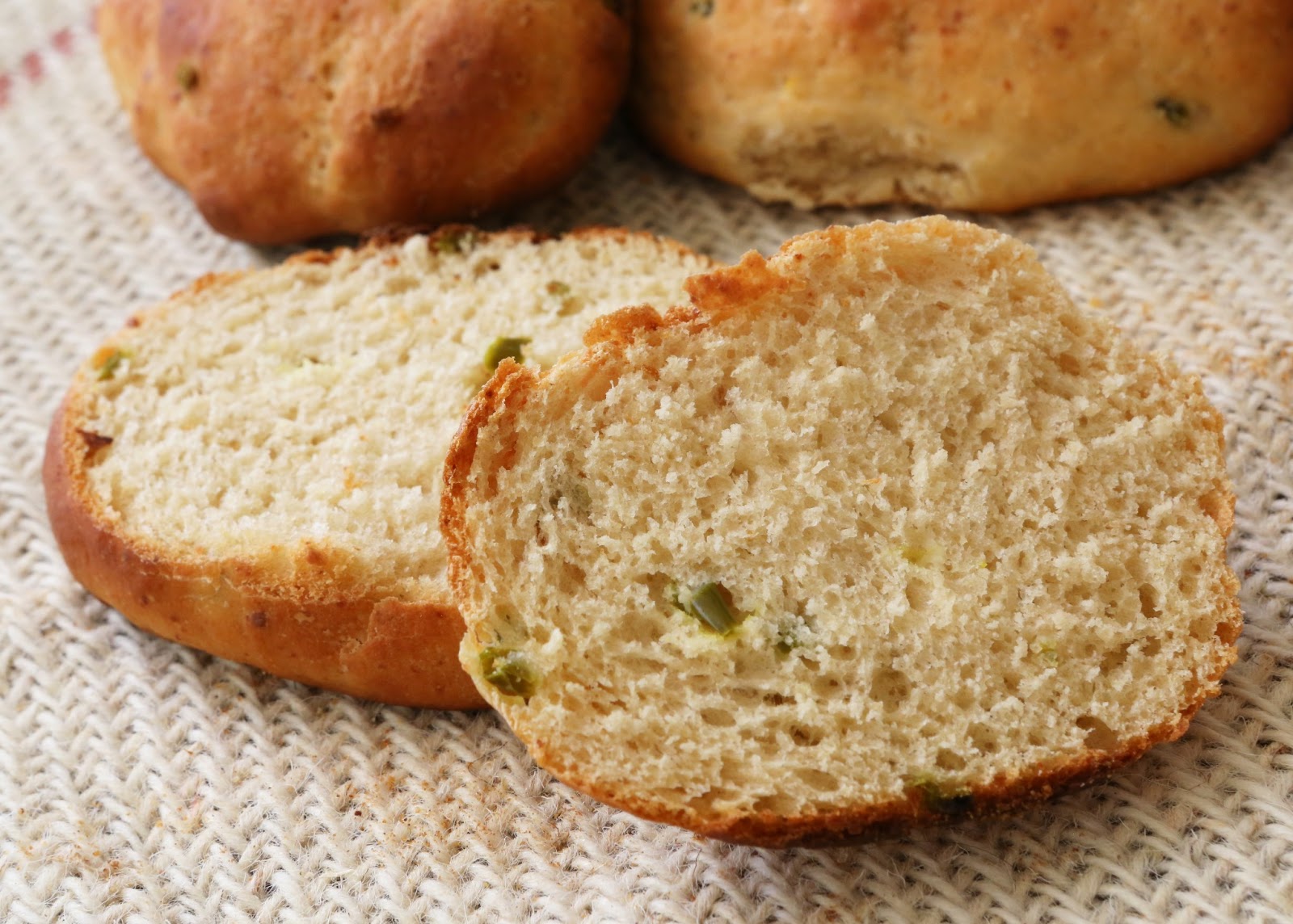
My new found love seems to be bread-making. The freshly made, warm, non-chemical infiltrated bread can't be beat. And who doesn't love the yeasty-toasty aroma the kitchen fills up with while baking? I've been enjoying trying out different recipes and practicing my techniques. Bread making is deeply therapeutic and satisfying. If you have any pent up frustration from work or whatever other things life throws at you, take it out on the dough and knead it out! After the first couple of failed attempts, I've got it down pretty well now. The most important thing to bread making are finding the right balance of flours, kneading the dough really well and giving it time! Yes, I used to get very impatient earlier and not let the dough rise enough or slice the bread too fast after baking - both of which will result in dense, sticky loaves. Once you get past that, you'll realize that the basic technique to making bread is pretty much the same - activate/proof the yeast, add flour, knead, let rise, knead again and bake. 


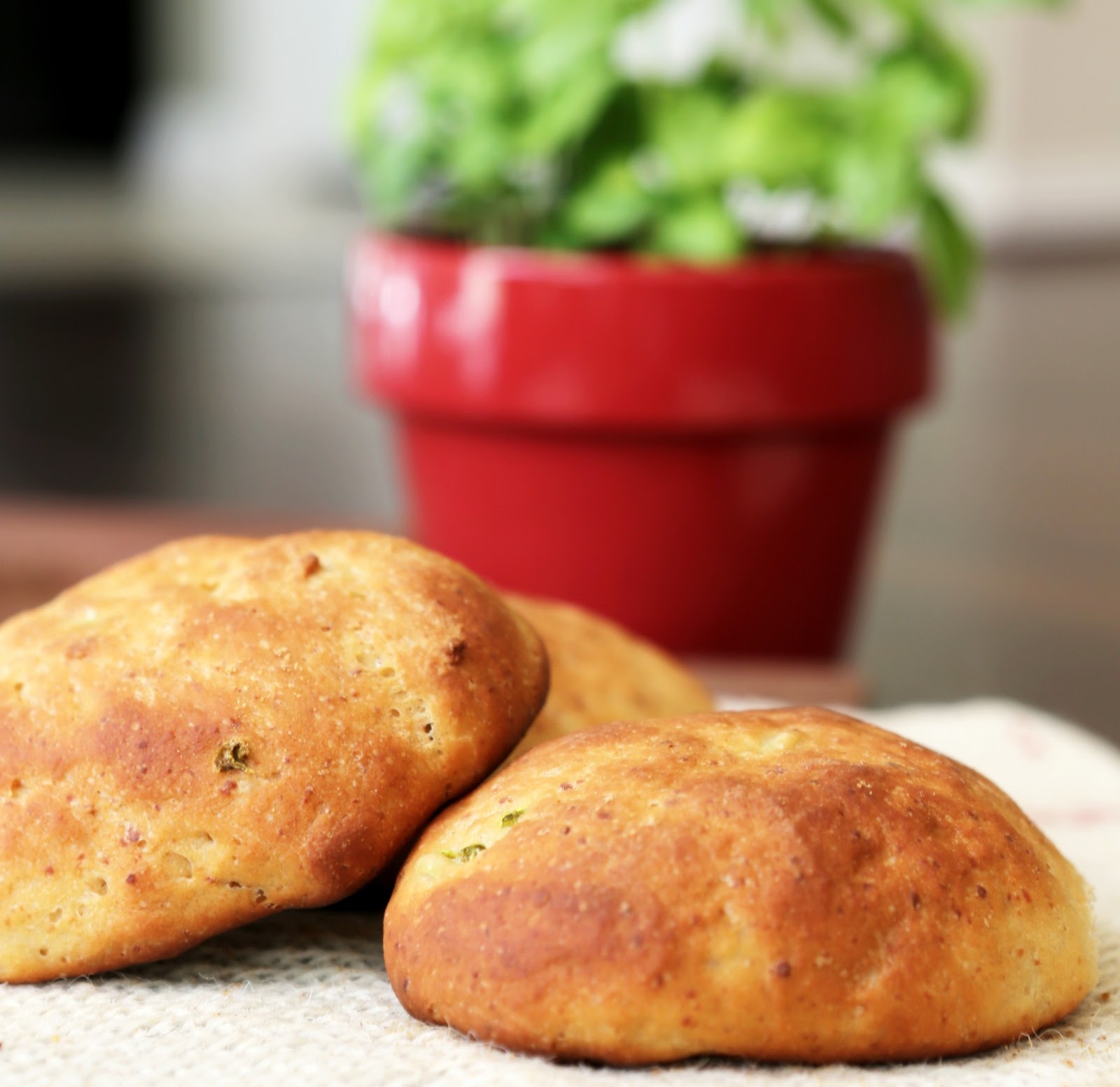
I had bought a copy of Homemade Bread - Popular Kitchen Series a few months back. It's a great little magazine that explains bread making techniques in detail and has some great recipes anyone can try at home. I've tried a few now, some with my variations, and they worked out great. A few days back, I took a recipe for a basic loaf and made smaller sandwich rolls with some oomph. Jalapeno-parmesan rolls were great to make quick sandwiches - especially for lunchbox. Husband likes them because sandwiches are are easy to eat at work. With a fried egg in between, they make for a great brunch. There's lots of flavor in the bread itself, so anything you stuff in between will taste great. The recipe is very adaptable - you can add a myriad of things to the dough, like olives, onions, sun-dried or regular tomatoes, zucchini, garlic, herbs, any other cheeses you like. Let your creativity go wild. 


Jalapeno-Parmesan Sandwich Rolls

Ingredients:
1 Cup warm water
1 Packet active dry yeast
2 Teaspoons sugar
1 Teaspoon salt
2 Tablespoons olive oil
1 1/2 Cups all purpose flour (APF)
1 + 1/4 Cups Whole Wheat Flour
1/4 Cup grated parmesan cheese
3-4 Tablespoons chopped pickled jalapeno - adjust depending on your preference
Olive oil for greasing
Corn flour for dusting
  • Add active dry yeast and sugar to warm water and set aside for 10 minutes or until the mixture is fully frothy. Don't heat the water too much else the yeast will just die.
  • Once frothy, add salt, olive oil, APF, 1 cup of whole wheat flour, cheese and chopped jalapeno and start kneading. Add whole wheat flour little by little if the dough is too sticky. Only add enough so the dough doesn't stick. You want a soft, pliable dough ball. 
  • To really get the gluten working, stretch the dough with the heel of your palm and fold it back. Knead so for 10 mins. Then cover the dough and let it sit for an hour or so or until the dough doubles in size. 
  • Punch the risen dough and knead again for another 10 mins. Make 6 equal portions of the dough and roll them round or slightly oval. 
  • I prefer using my giant dutch oven for bread baking, but use any thick bottom pan you have. Grease the bottom with some olive oil and dust with a little bit of corn flour. Place the dough balls with some space in between and brush them with oil. Cover and keep aside for another hour. They should rise.
  • Preheat oven at 425F and bake the bread for 35-40 mins or until golden brown. 
Let the bread cool completely before cutting it.


Tuesday, February 26, 2013

My Favorite Kitchen Tool

When it comes to kitchen gadgets and tools, I find one-function use items quite cluttering. My kitchen is stocked with tools that get used more or less on a regular basis - a George Foreman grill, my beloved Ronald food processor and mixer, a small ice-cream maker for the hubs, and a not-so-techy stone mortar-pestle set. The last one being my ultimate favorite - as I mentioned herehere and here. If the world of technology were ever to crumble down, I would survive just fine in my kitchen with the use of my mortar and pestle (and that's about it :D).

Our ancestors have used mortar-pestles to grind and crush plant roots, leaves etc since the Vedic ages. But even with the passage of time and technological advances, we continue using them. I remember using/seeing various stone tools such as Pata-varvanta (batan) and Jaata (grain grinder) as a kid. While those are pretty obsolete now, mortar and pestle (called Khal-batta in Marathi) still get used every day to grind spices, ginger-garlic or green chilies-cilantro in my kitchen. All the women in my house wholeheartedly believe that anything ground in the mortar tastes different (and by that, I mean way better). It is true, because the pounding gets the oils in your food out in a way a mixy just can't. So even though it takes a little time and some muscle work, I prefer my good old mortar-pestle for certain things. Especially when it comes making chutneys! I love the rustic, un-even coarseness and the complete marriage of flavors mortar-pestle can achieve.

I made one of my most favorite (yes, I say that about a lot of things) chutneys the other day to go with savory Ghavan - Maharashtrian Shengdana chutney (peanut chutney). Now, there are several versions of this chutney - with or without garlic, coconut or sesame seeds. My favorite version is garlicky, slightly moist with very lightly roasted peanuts. This chutney reminds me of some of the funnest memories from childhood - mom would pack me a sandwich with generous spread of fresh butter and chutney, or roll parathas sprinkled with it, or mix some rice-batata bhaji-daal-chutney, as filling and easy to eat lunches. Shengdana chutney is extremely versatile and tastes great when mixed with some yogurt to go with roti or rice. Oh, there's nothing more comforting!


Shengdana Chutney - Maharashtrian Peanut Chutney

Ingredients:
1 Cup peanuts
3 Garlic cloves
1 Teaspoon tamarind concentrate/pulp
2 Teaspoons red chili powder (adjust according to taste)
Sugar to taste (I used ~ 1 1/2 teaspoons)
Salt to taste

  • Lightly roast peanuts in a pan on low heat. I roast them just enough to get the skin off. Let them cool and peel the skin. I find taking a handful of peanuts and rubbing them between palms the easiest way to remove the skin. Then simply fan the skin lightly to separate the nuts from the peels. 
  • Grind garlic cloves in mortar-pestle first so you don't end up with big chunks of it. 
  • Add peanuts, tamarind pulp, red chili powder and grind coarsely. 
  • Add sugar and salt and find the perfect combination of spicy-salty-tangy-sweet for you and grind slightly to mix everything well. 
The chutney will store in the fridge for 2-3 weeks.

What is your favorite kitchen tool and how do you use it?

Monday, February 25, 2013

Dumpling Party

The San Diego Food Bloggers (SDFB) community meet ups are always something to look forward to. Our leader Marie of Meandering Eats is popular for coming up with great themes for the get-togethers. A few of us SDFB ladies got together for a fun dumpling party at Marie's place this Saturday. We gobbled up a variety of dumplings, which, apart from the usual savory Asian kinds, included sweet blueberry dumplings - yum!

Veg Momos - steamed and pan-fried on one side (the other side ;)
When Marie first announced the event, I immediately thought of making Modak - my ultimate favorite dumplings. But then, modaks get made quite often in my house, thanks to my husband who will eat them any day. I could use a change and try something new. The next thing that came to mind was Nepali vegetable Momo - a savory dumpling very similar to its other Asian siblings but with some familiar spices to my Indian palate. Momos are native to Nepal and other Himalayan states/countries. I assume they were borrowed from the Chinese cuisine  Momos were a favorite thing to eat at my usual dine-out place in Utah - the Himalayan Kitchen. That's where I had momos for the first time and have been a fan ever since.


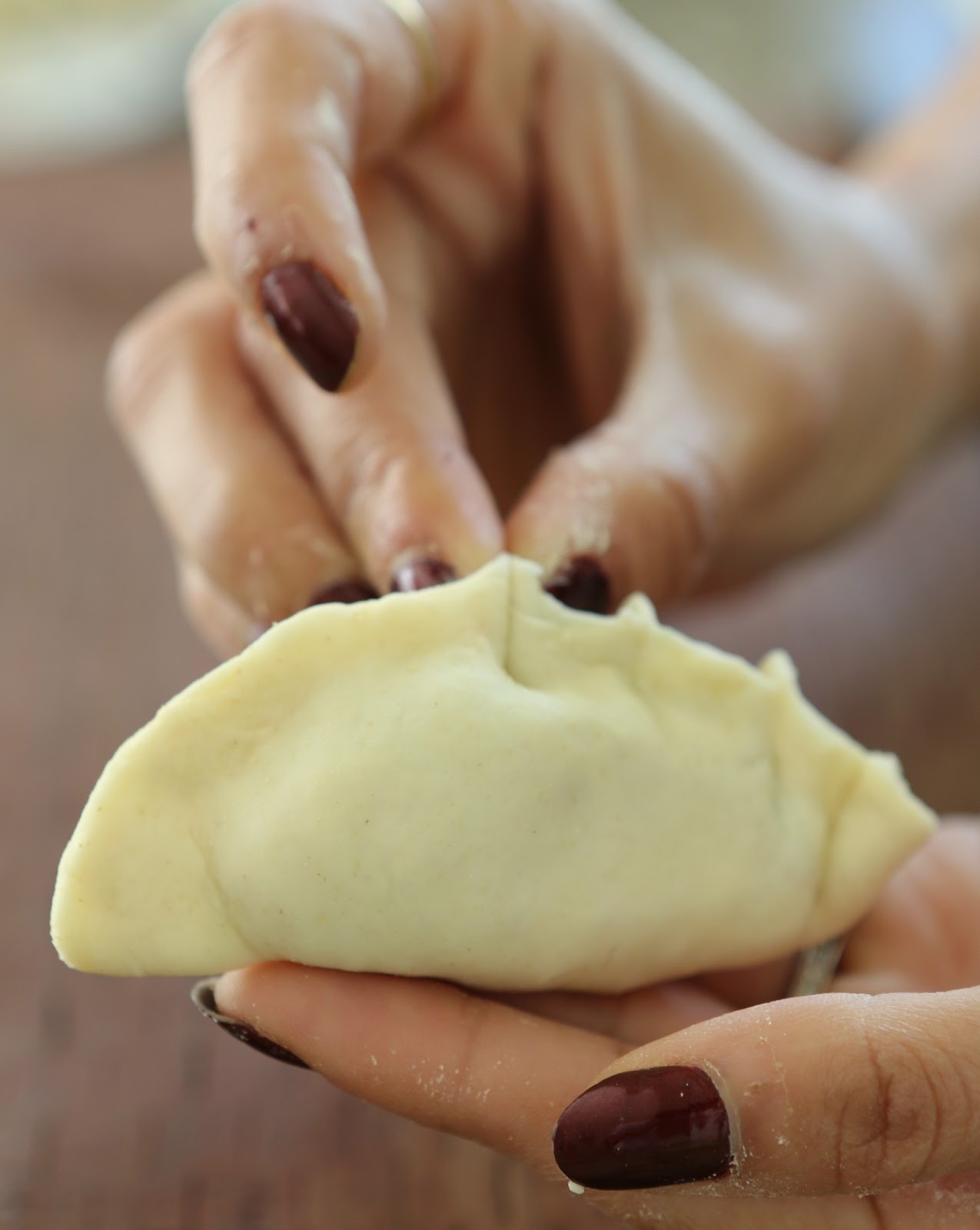
I found a whole lot of recipes online with some Tibetan or Bhutani variations. These dumplings have a simple covering of all purpose flour dough with filling of all sorts. The vegetarian dumplings have a variety of finely chopped vegetables sauteed with onion, ginger, garlic and some other spices. A few ingredients that struck me as unique were fenugreek seeds, and cumin and coriander powder. These are not the spices you would expect to find in a traditional Asian dumpling. And momos don't typically have soy sauce. This creates a unique dish that combines far east Asian and south Asian flavors. Momos can be simply steamed or pan-fried after steaming for some smokiness and sear, which is how I like them. They are traditionally served with a tangy tomato chutney, or 'tomato achaar'. I went for a quick combination of oil and Sriracha sauce. The shapes of momos are fun. You can shape them literally like modak. I attempted the half-moon shape with some degree of success.


Notes:
  • The APF dough seizes while rolling so it's a little tedious work. But that's the maximum difficulty level!
  • If you plan on making momos, steam them just before serving. As I realized, they start to dry out if kept for too long. 

Nepali Veg Momo

Ingredients:
Dough:
1 Cup all-purpose flour
Water as needed
A pinch of salt

Filling:
2 Cups finely chopped vegetables - (Cabbage, carrots, mushrooms, spring onions, red & green bell peppers, spinach). Add more of cabbage and carrots than other veggies
2 Large garlic cloves - finely chopped (~1 tablespoon)
1/2 Inch piece of ginger - grated
1/4 Medium onion - finely chopped
Spices - ground fenugreek, cumin and coriander seeds, 1/2 teaspoon each
Handful of cilantro - finely chopped
Red chili powder to taste
Salt to taste
2 Teaspoons sesame oil
Vegetable oil for pan-frying
  • Form a stiff dough of APF with water and a pinch of salt. Some add a pinch of baking soda to the dough. I left it out. Cover and let it sit. 
  • Heat sesame oil in a pan and add onion, ginger, garlic. Saute until onion is translucent. 
  • Add the ground spice mix, red chili powder, all the veggies and cilantro and saute for a min or so just until the vegetables are tender. Do not overcook them. 
  • Turn off heat and add salt at the very end so that the vegetables don't become watery. You want the filling to be dry. If it gets too watery, you can add a spoonful of APF mixed with a little bit of water to the filling and cook for a few seconds. That will hold the filling together. Let it cool before making the momos.
  • To shape the momos, roll out the dough into a thin roti/sheet - thin enough to be able to see light from the other side but thick enough that it won't rip while shaping. 
  • Cut out small rounds with either a katori or a cookie cutter (as shown in picture above). Place a spoonful of the filling at the center and press close both ends by folding the round in the center. 
  • To give them that characteristic dumpling look, pinch the excess flour to make petal-like shapes where you closed the dumpling. If you have too much flour at the end, just cut it with a knife before pinching. 
  • Steam these dumplings in a steamer for 5-6 mins. I don't have the bamboo steamer, so I just put them in a greased pressure cooker vessel and steamed them in the pressure cooker without the whistle. 
  • You can serve them just like that or pan-fry them in a little bit of oil on one side only until lightly browned. 
All the goodies at the Dumpling party!


LinkWithin

Related Posts Plugin for WordPress, Blogger...